Bleeding gums are most often an early sign of gingivitis, the mild stage of gum disease caused by plaque at the gum line (CDA). Gingivitis can be reversed with daily brushing, flossing and a professional cleaning. Other causes include brushing too hard, starting to floss, pregnancy, blood thinners and diabetes. If your gums bleed often, or the bleeding lasts more than two weeks, book a checkup.
Families in Saddle Ridge, Savanna, Cornerstone and across NE Calgary can book a teeth cleaning in Calgary NE with evening and weekend hours. Here is what usually causes bleeding gums and what helps.
What causes bleeding gums?
Healthy gums are pink and firm and don’t bleed easily (MyHealth Alberta). When they do bleed, the cause is usually at the gum line. Sometimes it is a health issue elsewhere in the body.
Plaque and gingivitis
Plaque is a clear, sticky film of bacteria that forms on your teeth every day. If it stays on the teeth, it hardens into tartar (also called calculus), which only a dental professional can remove (CDA). Plaque along the gum line irritates the gums. Warning signs include puffy gums, traces of blood on your toothbrush and a change in gum colour. Gingivitis is usually not painful, so it is easy to miss.
Gingivitis vs periodontitis
- Gingivitis is inflammation of the gums. It is the early, mild form of gum disease, and it can be reversed with good daily care (Public Health Agency of Canada).
- Periodontitis is the advanced form. It affects the gums and the bone that hold your teeth in place, and its damage usually cannot be reversed (Public Health Agency of Canada).
Gum disease is very common. The CDA says seven out of 10 Canadians will develop it at some point in their lives (CDA). For the full list of warning signs, read our post on symptoms of periodontal gum disease.
Brushing too hard or starting to floss
Gums can bleed if you brush too hard, use a hard-bristled toothbrush, or snap floss against the gums (MyHealth Alberta). If you have just started flossing, some bleeding at first is common. It usually goes away on its own in about a week (American Dental Association). Keep flossing gently while your gums settle.
Pregnancy
Hormone changes during pregnancy can make gums more sensitive. They may bleed easily even with good brushing, which is called pregnancy gingivitis (Public Health Agency of Canada). The agency suggests a checkup and cleaning in the first trimester. Tell your dental team that you are pregnant.
Blood thinners and other medicines
Blood-thinning medicines can make gums bleed easily. So can some other medicines, such as phenytoin (a seizure medicine) and calcium channel blockers (a type of heart and blood pressure medicine) (MyHealth Alberta). Keep taking your medicine as prescribed. Tell your dentist everything you take. If you take a blood thinner and the bleeding does not stop quickly, contact your physician (ADA).
Diabetes
People with diabetes have a higher risk of serious gum disease. High blood sugar lowers the body’s ability to fight infection (Diabetes Canada). Tell your dentist if you have diabetes or prediabetes. Our post on dental hygiene and diabetes explains the link in more detail.
Smoking
Smoking doubles the risk of gum disease compared with not smoking (CDC). It can also hide the warning signs. Tobacco affects the normal bleeding response, so a smoker may not see bleeding or swollen gums even when gum disease is present (MyHealth Alberta).
Less common causes
Now and then, bleeding gums point to a health problem outside the mouth. Examples include bleeding disorders, anemia (low iron or low red blood cells), and a lack of vitamin C or vitamin K (MyHealth Alberta). Severe vitamin C deficiency, called scurvy, is uncommon in countries with low rates of food insecurity (Merck Manual). If your gums bleed regularly or enough to worry you, see your dentist or your family doctor (ADA).
What to do at home for bleeding gums
Most bleeding from gingivitis improves when plaque is cleaned away every day. These steps help:
- Brush twice a day with fluoride toothpaste and a soft-bristled toothbrush with rounded bristles (CDA). Use gentle strokes at the gum line.
- Floss once a day. Slide the floss between your teeth and curve it into a C shape around each tooth, just below the gum line (CDA).
- If you cannot brush after a meal, rinse with warm salt water: 1 teaspoon of salt in 1 cup of warm water (MyHealth Alberta).
- Choose toothpaste and mouthwash with the CDA Seal of Recognition, which means the CDA has reviewed the product (CDA).
- Avoid smoking and other tobacco products.
- Check your gums in the mirror regularly. Note any puffiness, colour change or bleeding.
Give these habits about two weeks. If the bleeding has not stopped by then, see your dentist (Cleveland Clinic).
How dentists treat bleeding gums
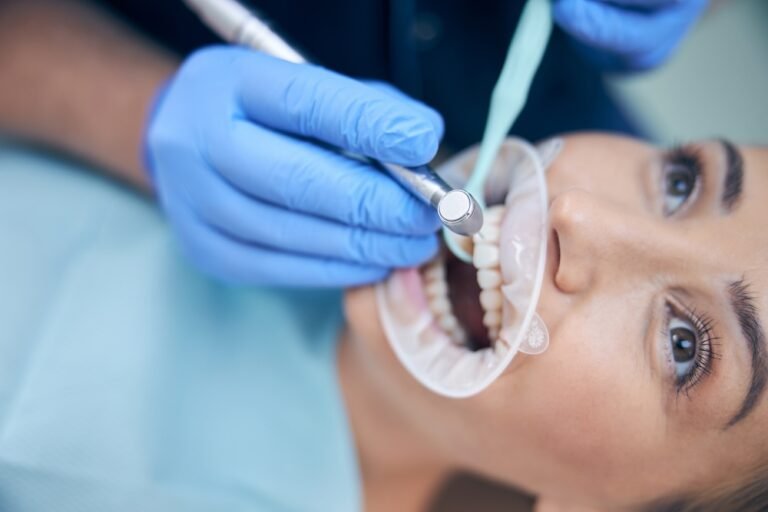
At your visit, the dentist or hygienist checks your gums with a periodontal probe. This thin tool measures where the gum attaches to each tooth. X-rays show how much bone surrounds your teeth (CDA).
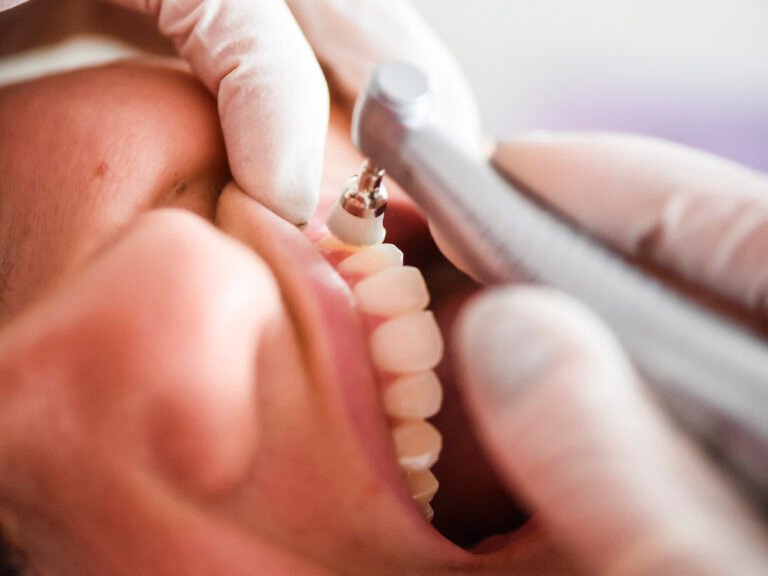
In early gum disease, the main treatment is a professional cleaning to remove tartar, plus brushing and flossing at home (CDA). Deeper gum pockets may need scaling and root planing. This is a deep cleaning below the gum line that also smooths the tooth roots. Learn more in how scaling and root planing help with gum disease. If gum disease is more serious, your dentist may refer you to a periodontist, a dentist who specializes in the gums and bone around the teeth (CDA). Your dentist will explain which treatment you need and whether it would be done here or by a specialist.
When to see a dentist about bleeding gums
Book a checkup if you notice any of these signs:
- Your gums bleed most days when you brush or floss.
- The bleeding has not stopped after two weeks of gentle brushing and daily flossing.
- Your gums are red, puffy, sore or pulling away from your teeth (Public Health Agency of Canada).
- You have bad breath that does not go away.
- A tooth feels loose, or your bite feels different.
- Your gums bleed on their own, without brushing or flossing.
- You are pregnant, have diabetes or take a blood thinner, and your gums have changed.
Swelling with pus at the base of a tooth, a fever or a painful gum can mean an infection (MyHealth Alberta). Call us, and we will offer a same-day emergency appointment when possible. Outside clinic hours, call Health Link 811 for 24/7 advice from a registered nurse (Primary Care Alberta). Go to the nearest emergency department for facial swelling with fever. Call 911 if swelling makes it hard to breathe or swallow.
Bleeding gums FAQ
Some bleeding is common when you first start flossing, and it usually settles in about a week. If it keeps happening after two weeks of gentle daily flossing, book a checkup.
Bleeding from gingivitis can be reversed with daily brushing and flossing. Tartar can only be removed by a dental professional, so a cleaning is usually part of the fix.
No. Keep flossing gently once a day. Bleeding caused by plaque usually improves as the gums get healthier. If it does not, see your dentist.
Pregnancy hormones can make gums more sensitive, so they may bleed easily even with good brushing. The Public Health Agency of Canada suggests a checkup in the first trimester. Tell your dental team you are pregnant.
Yes, blood thinners can make gums bleed more easily. Keep taking your medicine as prescribed, tell your dentist you take it, and contact your doctor if bleeding does not stop quickly.
A cleaning and exam is a simple first step for bleeding gums. Learn about teeth cleaning at The Port Dental Clinic, then book online or call 403-345-1110. We are in The Port Plaza in NE Calgary, with direct billing to most insurance plans, and we are a registered CDCP provider.