Dental implant cost factors fall into three groups: how many teeth you are replacing, what your jaw needs before an implant can go in, and what goes on top. Extractions, bone grafting, a sinus lift, 3D imaging, materials and specialist care can each add to the fee. Every mouth is different, so the only accurate number is a written estimate after an exam. For an overview of 2026 costs, insurance and financing, see our guide to dental implants cost in Calgary.
Below, we explain each factor in plain terms. At The Port Dental Clinic in Calgary NE, our dentists go through every item on your plan with you. Learn more about dental implants at our clinic.
How many implants do you need?
Each implant has its own surgery, parts and lab work, so the number of implants is a major part of the fee. Replacing several teeth does not always mean one implant per tooth. Two implants can hold a bridge of three or more teeth. A full arch of teeth on an implant-supported denture needs several implants, and the number depends on your jaw and the design.
Do you need a tooth removed first?
If a damaged tooth is still in place, it has to come out before the implant goes in. A simple extraction costs less than a surgical one. In a surgical extraction, the gum is opened or the tooth is sectioned (cut into pieces) to remove it.
For reference, the Alberta Dental Association 2026 suggested fee guide puts an uncomplicated extraction of one tooth (code 71101) at roughly $150 to $200, and a surgical extraction (code 71201) at roughly $300 to $350. These are suggested fees for general dentists, not this clinic’s prices. Actual cost depends on the tooth and your insurance.
Is there enough bone for an implant?
An implant needs enough healthy bone around it to stay firm. After a tooth is lost, the bone in that spot can shrink over time. The Canadian Dental Association notes that if your jawbone has shrunk or has not developed normally, you may be able to have a bone graft to build it up.
A bone graft adds new bone material to the jaw. It means an extra procedure, materials and often more healing time before the implant goes in. Your dentist checks bone height and width on 3D imaging before recommending one. Your dentist will also explain who does the graft, here or with a specialist.
What is a sinus lift?
The upper back teeth sit below the sinuses, the air spaces above the upper jaw. If there is too little bone there, a sinus lift raises the floor of the sinus and adds bone graft material underneath. This creates room for an implant. The American Academy of Periodontology explains that the new bone is usually left to develop for several months before the implant goes in. A sinus lift is a separate surgical step that adds to the total cost. Your dentist will explain who would do it, here or with a specialist.
3D imaging and treatment planning
Implant consultations at our clinic include 3D imaging. A common type for implant planning is a CBCT scan (cone beam computed tomography), a 3D X-ray of the jaw. It shows the height and width of the bone and where nerves and sinuses sit. A regular X-ray is a flat image, so it cannot show bone width in the same way. Your dentist will explain which scan you need and where it is taken. Imaging and planning time are part of the total cost. Our article on CBCT imaging for implant placement explains more.
Type of restoration: crown, bridge or implant denture
What sits on the implants is a large part of the fee. Each option is custom-made by a dental lab.
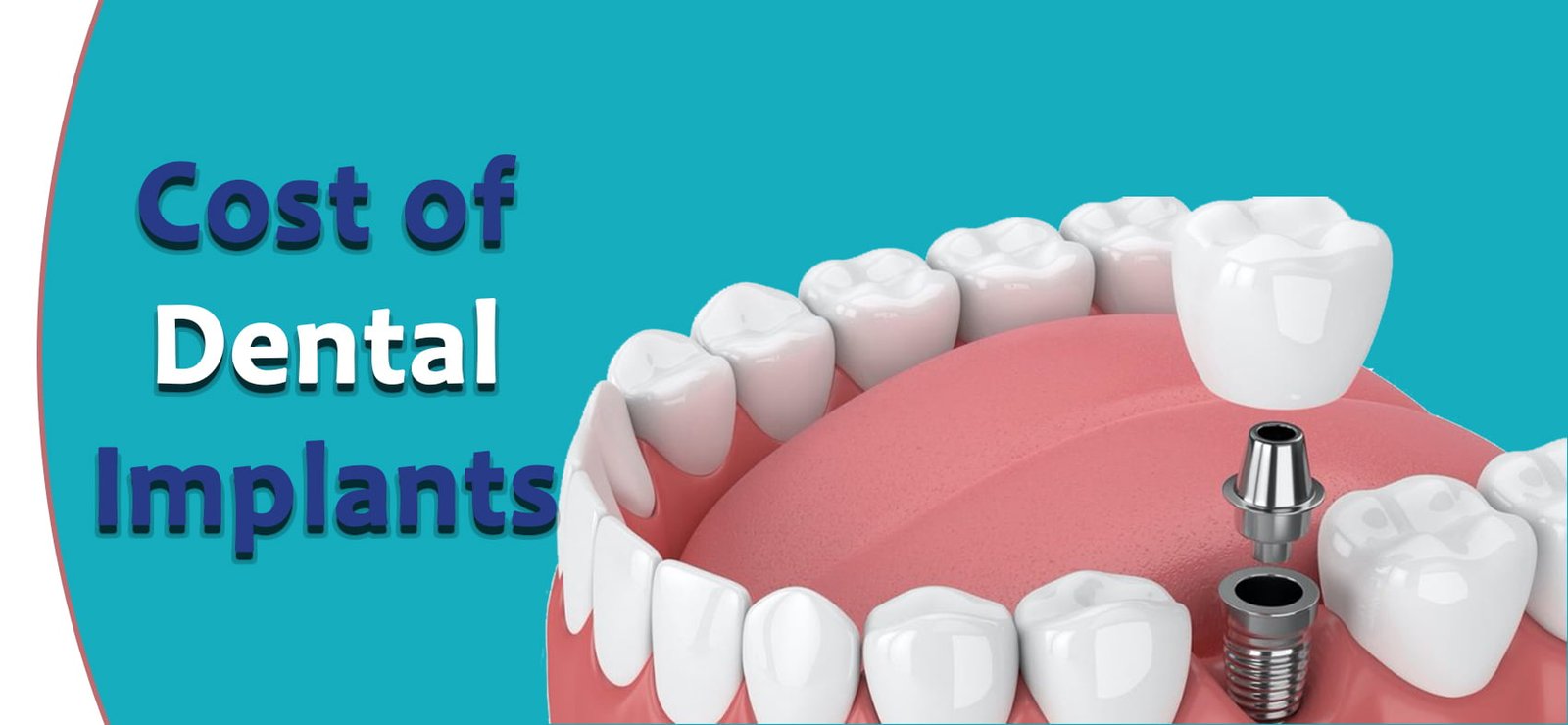
- Single crown. One replacement tooth on one implant.
- Implant bridge. Several teeth joined together and held by two or more implants.
- Implant-supported denture. A full set of teeth held by implants. Removable versions snap on and off for cleaning. Fixed versions are removed only by a dentist.
Fixed full-arch teeth usually need more implants and more lab work than a removable implant denture, so they cost more.
Materials: titanium or zirconia
Most implants are titanium. The CDA describes an implant as an artificial root made of titanium metal. Some implants are made of zirconia, a tooth-coloured ceramic. The crown on top may be all-ceramic, zirconia or porcelain fused to metal. Material choice affects lab fees, appearance and strength, so it changes the price.
Sedation and comfort options
Implant placement is usually done with local anaesthetic, which numbs the area. Some people prefer sedation to feel more relaxed, and that adds a fee. For example, the Alberta Dental Association 2026 suggested fee guide puts nitrous oxide (laughing gas) sedation for two 15-minute units of time (code 92412) at roughly $100 to $125. That is a suggested fee range for general dentists, not this clinic’s price. Ask which comfort options suit you and what each one costs.
Who places the implant: general dentist or specialist
The CDA explains that your dentist may place the implant or refer you to a dental specialist. Periodontists (gum specialists) and oral and maxillofacial surgeons are the specialists who place implants. Prosthodontists, who specialize in replacing teeth, may make the crowns, bridges and dentures that go on implants. Your dentist will explain who places your implant and who does any graft or sinus lift, here or with a specialist, before treatment starts. Each office sets its own fees, so a plan shared by two offices has two sets of fees.
Follow-up care and long-term upkeep
After placement, the implant needs time to bond with the bone. The CDA says this can take several months. Expect check-ups along the way. Ask whether these visits and any temporary tooth are in your estimate.
Long term, implants need daily brushing and flossing like natural teeth. Regular checkups let your dentist make sure your bite is right and the implant is not loose. The crown on top may need replacing after years of normal wear.
How insurance changes your share
Insurance lowers your share of the fee. Some plans pay toward implants under major services, and some exclude them. The CDCP excludes implants, bone grafts and ridge augmentation (rebuilding the jawbone), though it may cover an extraction. See our insurance and CDCP page and financing options through LendCare.
When to book an implant assessment
Book a visit if any of these apply to you:
- You have a gap from a missing tooth and chewing feels harder
- A tooth is cracked, very loose or has been advised for removal
- Your denture slips or makes eating uncomfortable
- An implant crown feels loose, or the gum around it is sore or bleeding
- You have pain or swelling. Call us, as we offer same-day emergency appointments when possible.
Outside clinic hours, call Health Link 811 for 24/7 advice from a registered nurse. Go to the nearest emergency department for facial swelling with fever. Call 911 for trouble breathing or swallowing.
Common questions about dental implant cost factors
The number of implants and what goes on top of them set most of the fee. Extra steps, such as an extraction, bone graft or sinus lift, add to it.
No. A graft is needed only when there is not enough healthy bone to hold the implant. Your dentist checks this with 3D imaging before planning treatment.
A CBCT scan is a 3D X-ray. It shows the height and width of your jawbone and where nerves and sinuses sit, so the implant position can be planned.
No. The CDCP Dental Benefits Guide lists implants, bone grafts and ridge augmentation as exclusions. It may cover an extraction or a complete denture.
Yes. After your assessment, we give you a written estimate that lists each stage. You can see which factors apply to you and check them with your insurer.
To see which factors apply to you, learn about dental implants at The Port Dental Clinic and book an assessment for a written estimate. Book online or call 403-345-1110. We’re at 4250 109 Ave NE in Calgary NE and open seven days a week.