Teeth Whitening
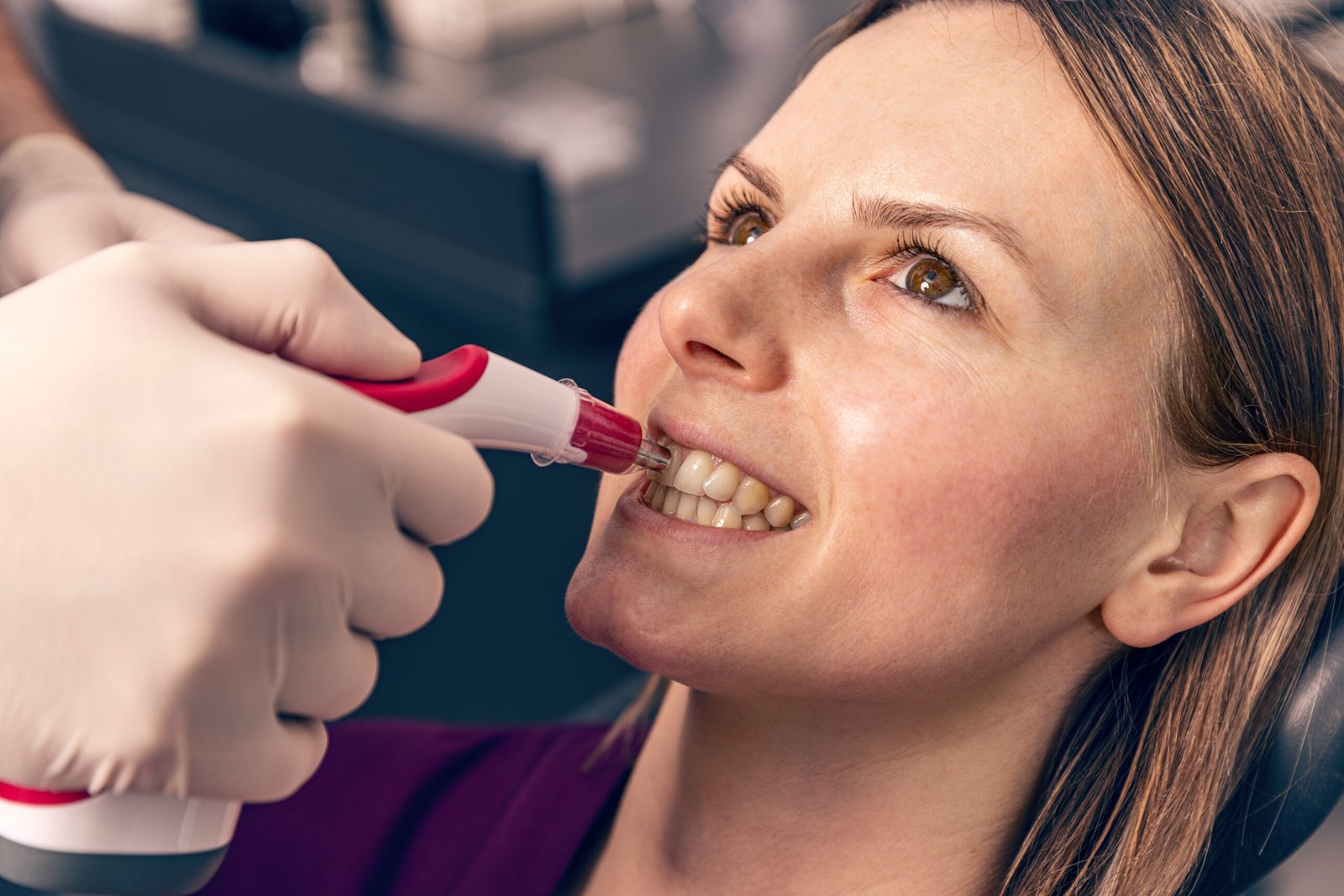
Yellow teeth treatment depends on the type of stain. Surface stains from coffee, tea, chai, turmeric or smoking usually respond well to a professional cleaning and teeth whitening. Stains inside the tooth, from age, some medicines or an injury, respond less to whitening. These may need internal bleaching, bonding or veneers. A single tooth that has turned dark needs an exam first, because the colour change can signal a problem with the nerve inside.
The Port Dental Clinic in Calgary NE offers Philips Zoom in-office whitening and take-home whitening. You can read about both on our teeth whitening in Calgary page. This guide explains why teeth change colour and which treatment fits each stain.
Why are my teeth yellow or stained?
Healthy teeth are not pure white. The Canadian Dental Association notes that natural tooth colour falls within a range of light greyish-yellow shades, and that teeth darken with age. Common causes of yellow or stained teeth include:
- Coffee, tea and chai: dark pigments in these drinks cling to enamel (the hard outer layer of the tooth).
- Turmeric and curries: turmeric (haldi) is a strong yellow pigment. Curries, dal and golden milk made with it can leave yellow surface stains.
- Smoking and chewing tobacco: these leave yellow to brown stains that brushing alone rarely removes.
- Age: enamel wears thinner over the years, so more of the yellower dentin (the layer under the enamel) shows through.
- Medications: antibiotics in the tetracycline family, taken while teeth are forming, can cause permanent yellow-grey-brown discolouration. Health Canada product information for one such antibiotic lists this risk in late pregnancy, infancy and childhood under age 13.
- Too much fluoride in early childhood: this can cause dental fluorosis, which shows as small white lines or flecks on adult teeth, as Health Canada explains.
- Injury or a root canal: a knock can damage the nerve inside a tooth, and the tooth may turn grey or darker. A tooth that has had a root canal can also darken over time.
Extrinsic vs intrinsic stains
- Extrinsic stains sit on the surface of the enamel and come from food, drinks and tobacco.
- Intrinsic stains sit inside the tooth and come from age, medicines, fluoride, injury or a root canal.
Many people have both. The CDA notes that not all discolouration responds to bleaching, which is why a dentist should check the cause first.
Which yellow teeth treatment fits your stain?
| Stain or situation | Option to ask about | What to expect |
|---|---|---|
| Light surface stains or tartar (hardened plaque) | Professional cleaning (scaling and polishing) | Removes tartar and many surface stains. A good first step before any whitening. |
| General yellowing from food, drinks, tobacco or age | In-office or take-home whitening | A peroxide gel (a bleaching agent) lightens the natural tooth colour. Results vary and are not permanent. |
| One dark tooth that has had a root canal | Internal bleaching | Bleaching gel is placed inside the tooth to lighten it from the inside out. Your dentist will explain whether it is done here or by a specialist. |
| One tooth that darkened after an injury | An exam and X-ray first | The colour change can mean the nerve is damaged, which may need treatment such as a root canal. |
| Deep grey or brown stains, or fluorosis spots | Bonding or veneers, sometimes after whitening | Whitening may help only a little. Covering the front of the tooth often gives a more even colour. |
| Old crowns, veneers or fillings that no longer match | Whitening natural teeth, then replacing the old restorations | Whitening does not change the colour of crowns, veneers, fillings or dentures. |
In-office vs take-home whitening
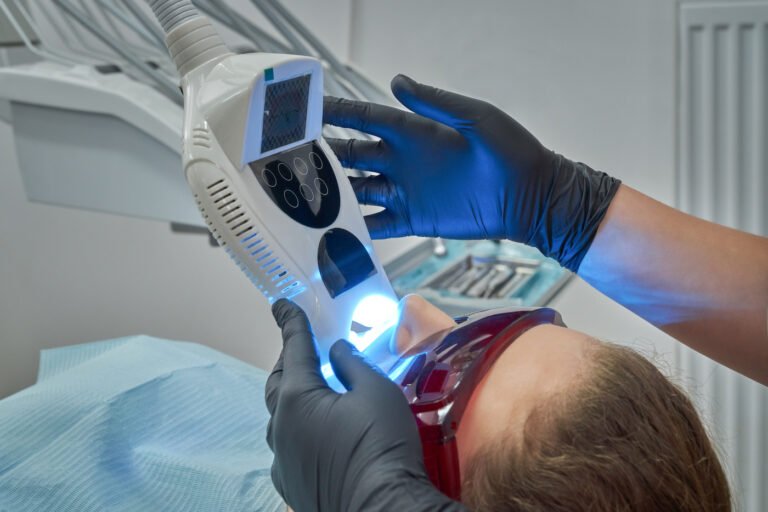
- In-office whitening: the dentist protects your gums, applies a stronger whitening gel and may use a light to start the bleaching action. Our clinic offers Philips Zoom in-office whitening. It is usually the quickest option, and results vary from person to person.
- Take-home whitening: our clinic also offers Philips Zoom take-home whitening. You wear trays filled with a milder gel for a set time each day, as your dentist directs. The change is gradual.
- Store-bought products: whitening toothpastes use mild abrasives, so they work on surface stains only. The CDA notes they should not replace a professional cleaning. Health Canada says home whitening kits are generally safe when you follow the directions carefully. Ask your dentist whether a home kit suits your teeth.
For a closer look at each option, read our guide to the types of professional teeth whitening.
Internal bleaching for a dark root canal tooth
Internal bleaching, also called non-vital bleaching, treats a tooth that is no longer alive. The CDA explains that if a tooth has changed colour because of a root canal, non-vital bleaching can lighten it from the inside out. The dentist places a bleaching gel inside the tooth through a small opening at the back, then seals it. It can take more than one visit, and results vary. Your dentist will explain whether this is done here or by a specialist. If the tooth stays darker than its neighbours, a crown or veneer can cover it.
When whitening will not work: bonding and veneers
When a stain does not lighten enough, covering the tooth often gives a better match.
- Bonding: tooth-coloured resin shaped onto the tooth to cover a stain, chip or gap.
- Veneers: thin shells of porcelain or composite resin attached to the front of the teeth. The CDA notes that porcelain veneers generally last longer and resist stains better than composite.
If you plan to whiten as well, whiten first, because bonding and veneers will not change colour later. The CDA notes that bonding and veneers are often considered cosmetic and may not be covered by dental plans, so see our insurance and financing options. You can also learn more about porcelain veneers in Calgary NE.
Whitening touch-ups: how to keep your results
Whitening results are not permanent. The CDA notes that many people repeat whitening from time to time. How long your shade lasts depends on your diet, tobacco use and cleaning habits.
- If you whitened with take-home trays, ask your dentist whether a short touch-up round makes sense for you, and how often.
- Rinse with water after coffee, tea, chai or turmeric-rich meals.
- Brush twice a day, floss daily and keep up with regular cleanings.
Read more about how long teeth whitening lasts.
Does teeth whitening cause sensitivity?
It can. Both the CDA and Health Canada note that tooth sensitivity and gum irritation can occur during whitening, and that these effects are temporary. If sensitivity starts with a home product, Health Canada suggests stopping for two or three days and then resuming. Tell your dentist before treatment if your teeth are already sensitive, so they can adjust the plan.
Who should not whiten their teeth?
Whitening suits most adults with healthy teeth and gums. Check with a dentist first in these cases:
- Children under 12: Health Canada labelling rules state that peroxide whitening products are not recommended for children under 12.
- Pregnancy: Health Canada advises talking to an oral health professional before whitening.
- Cavities or gum disease: these need treatment before whitening.
- Sensitive teeth: get advice first, since whitening can add short-term sensitivity.
- Front crowns, veneers or large fillings: these will not whiten, so your natural teeth may end up lighter than your dental work.
When to see a dentist about tooth colour
- One tooth turns grey, brown or darker than the others, especially after a knock
- New brown or black spots, which can be a sign of decay
- New chalky white spots, which can be an early sign of decay
- Sensitivity or sore gums from a store-bought kit that does not settle
For a recent knock to the mouth, call us at 403-345-1110 the same day. Go to the nearest emergency department for a serious injury to the face or jaw. Our dentists speak English, Punjabi, Hindi, Urdu, Nepali and Gujarati, and the clinic is open evenings and weekends.
Frequently asked questions
What is the quickest yellow teeth treatment?
In-office whitening is usually the quickest option. Results vary, and how much lighter your teeth get depends on the type of stain.
Can turmeric stain teeth?
Yes. Turmeric is a strong yellow pigment that can leave surface stains. Rinsing with water after meals and regular cleanings help keep these stains under control.
How often do I need a whitening touch-up?
It depends on your diet, tobacco use and cleaning habits. Your dentist can suggest whether and when a touch-up makes sense for you.
Can a dark root canal tooth be whitened?
It may be possible. Internal bleaching places a whitening gel inside the tooth to lighten it from the inside out. Results vary, and if the shade stays too dark, a crown or veneer can cover the tooth.
Will whitening work on crowns or veneers?
No. Whitening products only change the colour of natural teeth. Your dentist may whiten your natural teeth first and then replace crowns or veneers that no longer match.
To find the right option for your stains, see our teeth whitening in Calgary page, book online or call 403-345-1110. The Port Dental Clinic is at 4250 109 Ave NE #3145, open Mon to Fri 9am to 7pm and Sat and Sun 9am to 4pm.