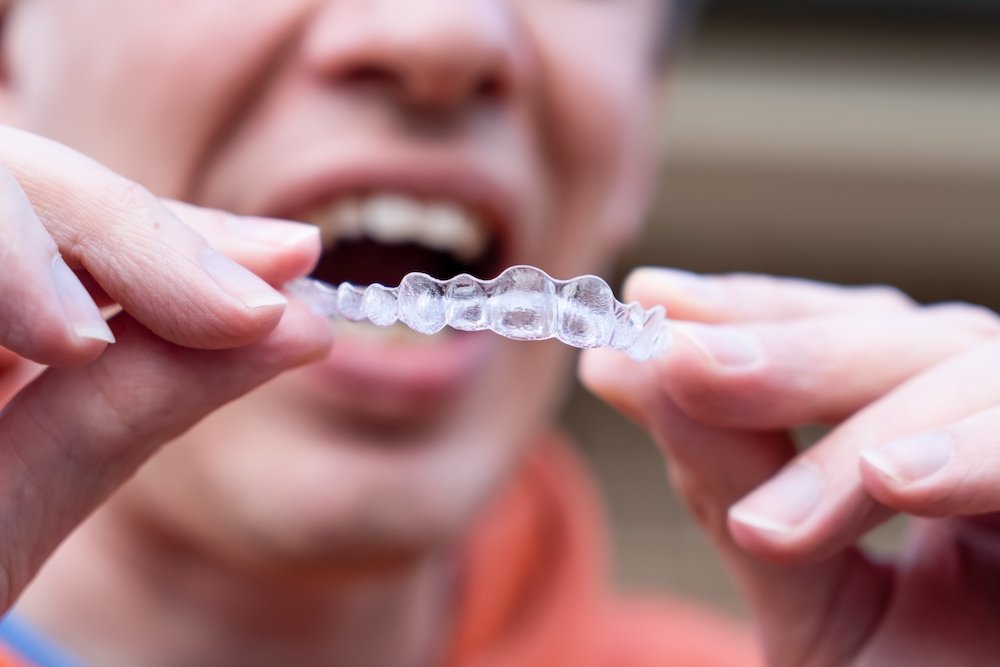
You will usually see six types of Invisalign named online: Express, Lite, Moderate, Comprehensive, Teen and First. Align Technology, the company that makes Invisalign, uses these names for different treatment options. Express, Lite and Moderate are smaller packages for milder cases, and Comprehensive is used for a wider range of cases, including complex bites. Invisalign First is designed for children aged 6 to 10. Your dentist recommends a type after examining your teeth and bite.
At The Port Dental Clinic in Calgary NE, our general dentists assess each smile and explain which option fits. Read more about Invisalign treatment at our clinic, or see our guide to Invisalign cost in Calgary for what affects the cost, insurance and payment options.
Types of Invisalign at a glance
| Type | Typical use |
|---|---|
| Invisalign Express, Lite and Moderate | Smaller packages for milder crowding or spacing, or teeth that shifted after braces |
| Invisalign Comprehensive | More complex crowding, spacing and bite problems, including cases where teeth are removed |
| Invisalign Teen | A name you may see for Invisalign treatment for teenagers |
| Invisalign First | Children aged 6 to 10 with a mix of baby and adult teeth |
Align sets how many aligners each package allows and what it includes, and these details can change, so we do not list them here. Your dentist decides how many aligners you actually need, based on a digital plan of your teeth.
Invisalign Express, Lite and Moderate
These smaller packages suit milder cases, such as a minor gap or slight crowding of the front teeth. They are also used for relapse, which means teeth drifting back after earlier braces, often when a retainer was not worn. Invisalign notes that relapse after braces often needs far less treatment than starting from scratch (Invisalign).
Each of these packages includes a set number of aligners. If your plan needs more, your dentist will suggest a larger package. Refinements are extra aligners made if teeth don’t follow the plan exactly, so ask how they are handled in your quote.
Invisalign Comprehensive
Comprehensive is used for more complex cases. These include moderate to severe crowding or spacing, bite problems such as an overbite, underbite or crossbite, and cases where teeth are removed to make room.
Some complex bites may need an orthodontist, a dentist who has completed a university specialty program in orthodontics. Your dentist will explain whether a specialist is needed for your case.
Invisalign Teen
Invisalign Teen is a name you may see for Invisalign treatment for teenagers. Teens wear the same kind of clear aligners as adults. Invisalign says teens should wear them 20 to 22 hours a day, removing them only to eat, drink anything other than water, and brush and floss.
Teens typically switch to a new set of aligners every one to two weeks. Your dentist will plan around any adult teeth that are still coming in. An honest talk about wear time matters, because aligners only move teeth while they are in. Our month-by-month Invisalign guide shows what to expect once treatment starts.
Invisalign First for children
Invisalign First is customized for children between 6 and 10 years old, who usually have a mix of baby and adult teeth. Align says the aligners are built to fit smaller teeth and treat a range of orthodontic issues as children grow. Early treatment, sometimes called phase 1, can help make room for adult teeth that are still coming in. A second phase of treatment may follow once all the adult teeth are in.
Your dentist will explain whether early treatment suits your child and whether a specialist is needed.
How does the dentist decide which type of Invisalign you need?
The type is chosen after your exam. At a consultation, the dentist:
- Checks your teeth, gums and any fillings or crowns
- Looks at how your upper and lower teeth meet (your bite)
- Takes X-rays and a 3D digital scan
- Builds a digital treatment plan that shows how each tooth will move, which sets the number of aligners
- Talks with you about wear time and your routine
If your plan needs more aligners than a package allows, the dentist uses a larger package. Cavities and gum problems are treated first, because teeth need healthy support before they move.
Can Invisalign fix every problem?
Clear aligners treat many crowding, spacing and bite problems. Some cases suit braces better, such as severe bite problems or a patient who is unlikely to wear aligners enough. The Canadian Dental Association notes that people of any age can benefit from orthodontic treatment. It lists clear aligners as one option alongside metal and tooth-coloured braces. Your dentist will explain the options for your teeth.
Older Invisalign names you may see
Invisalign product names have changed over time. Invisalign Full is an older name, and you may also see Invisalign Go, another option Align offers to dentists. If a quote names a type, ask which package it means and how many aligners it includes.
When to see a dentist about straightening your teeth
Book a consultation if you or your child have any of these:
- Crowded or overlapping teeth that trap food or are hard to floss
- Gaps between teeth that are getting wider
- Teeth that shifted after braces, or a retainer that no longer fits
- A bite that feels uneven, or front teeth that chip or wear
- A child aged 6 to 10 whose adult front teeth are coming in crowded
If you have pain, swelling or a broken tooth, call us first. We offer same-day emergency appointments when possible. Outside clinic hours, call Health Link 811 for 24/7 advice from a registered nurse. Go to the nearest emergency department for facial swelling with fever. Call 911 for trouble breathing or swallowing.
Common questions about the types of Invisalign
Lite is a smaller package for milder crowding or spacing, with fewer aligners. Comprehensive is used for more complex crowding, spacing and bite problems. Your dentist will explain which one fits your teeth.
Teens wear the same kind of clear aligners as adults, for 20 to 22 hours a day. Your dentist plans treatment around any adult teeth that are still coming in.
Invisalign First is customized for children between 6 and 10 years old, who usually have a mix of baby and adult teeth. A second phase of treatment may follow once the adult teeth are in.
The type depends on how far your teeth need to move. Your dentist plans the movement first, then matches it to a package. You can always ask why a type was recommended.
Yes. Teeth can drift after any orthodontic treatment, so a retainer is used afterward to keep them in place.
To find out which type of Invisalign suits you, learn about Invisalign at The Port Dental Clinic and book a consultation. Book online or call 403-345-1110. We’re at 4250 109 Ave NE in Calgary NE and open seven days a week.