
South Asian food traditions and healthy teeth go well together. For many South Asian families in Calgary, the habits that matter most come down to timing. That means how often sugar touches the teeth through sweet chai and mithai, and whether teeth get brushed after late snacks. Paan, supari (areca nut) and gutka are a separate concern, because the World Health Organization (WHO) reports that areca nut causes cancer. Small changes can help protect your teeth without giving up the foods you love.
Between them, our dentists speak English, Punjabi, Hindi, Urdu, Nepali and Gujarati, so you can talk about food, family and habits in the language you prefer. Learn about teeth cleaning in NE Calgary or what to expect as one of our new patients.
How does sugar timing affect your teeth?
Bacteria in plaque (the sticky film on teeth) turn sugar into acid that attacks the tooth surface, as Canada.ca explains. Each sip of sweet chai or bite of mithai starts a new acid attack. Saliva made during a meal helps wash food off the teeth, the Canadian Dental Association (CDA) notes. So a sweet enjoyed with a meal is easier on teeth than the same sweet nibbled across an evening.
Chai and other sweet drinks
Chai is part of daily life in many homes. A few simple changes help your teeth:
- Enjoy each cup in one sitting, ideally with a meal or snack, instead of sipping it over an hour
- Rinse with water after, as the CDA suggests after anything sugary
- If you’d like less sugar, cut back a little at a time. The CDA suggests adding less sugar to tea and coffee.
- For children, make water the drink between meals, as Canada.ca advises
The same ideas apply to sweet lassi, mango juice, pop and other sweet drinks.
Mithai and late-night snacks
Burfi, ladoo, jalebi and gulab jamun are made for sharing and celebrating. Sticky, syrupy sweets cling to the teeth, so timing helps. The CDA suggests having sweets with a meal rather than as a snack.
On busy evenings and festival nights, dinner can run late, and chai or a sweet may follow. Brush after the last food or sweet drink of the day. If you brushed early and then had a snack, brush again before bed. Floss once a day to clean between the teeth, where a toothbrush can’t reach. Your dentist or hygienist can suggest habits that suit your mouth.
Paan, supari and gutka: what to know
Paan is a long tradition, often shared after meals and at celebrations. Betel quid (paan) generally combines betel leaf, areca nut (supari) and slaked lime, and tobacco is often added, according to the WHO. The WHO’s cancer research agency found that:
- Areca nut is carcinogenic to humans, which means it can cause cancer
- Chewing betel quid without tobacco causes oral cancer
- Chewing betel quid with tobacco causes cancer of the mouth, throat and esophagus (food pipe)
- Areca nut causes oral submucous fibrosis, a stiffening of the tissue inside the mouth that can turn into cancer
Sweetened supari mixes contain areca nut too. The WHO notes that some young children start with sweetened areca nut products, so keep these mixes away from kids.
Gutka, zarda and khaini contain tobacco. The CDA lists the effects of smokeless tobacco on the mouth. They include stained teeth, bad breath, receding gums (gums pulling back from the teeth) and permanent gum and bone loss. The CDA adds that quitting lowers the risk of cancer, gum disease, tooth decay and mouth sores that don’t heal.
If you use any of these, let your dentist know. We’ll ask without judgment and look closely at your cheeks, tongue and gums. The CDA advises asking your dentist about oral cancer screening at regular exams. If you’d like help quitting, talk to your doctor, pharmacist or dentist.
Diwali 2026: enjoying sweets and protecting smiles
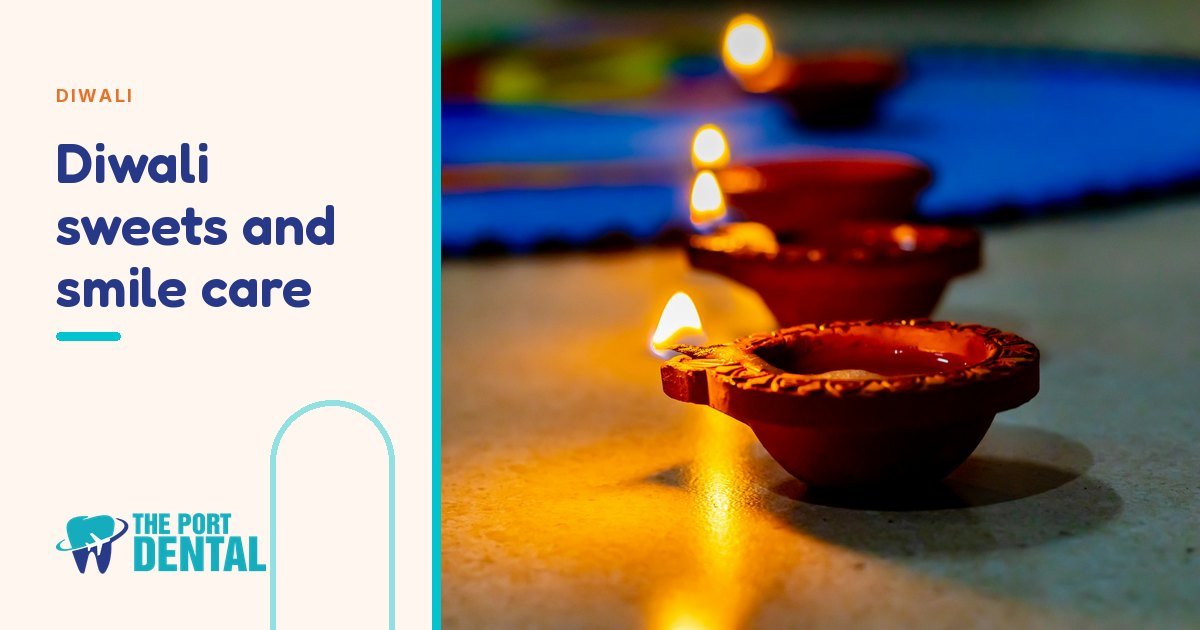
Diwali falls on Sunday, November 8, 2026. The festival of lights is celebrated by Hindu, Sikh, Jain and Buddhist communities in Canada, with diyas, rangoli and festive meals shared with loved ones, as the Government of Canada notes. Sikh families also celebrate Bandi Chhor Divas on the same day, honouring the release of Guru Hargobind Sahib Ji, the sixth Sikh Guru (Canada.ca).
Boxes of mithai are part of the joy of visiting family and friends. These tips help you enjoy them and look after your teeth:
- Serve mithai on a plate with the meal or right after it, instead of leaving an open box out all evening
- Keep water on the table and take a sip after sweets
- Adults can chew sugar-free gum after sweets to help make saliva, which washes sugar away (CDA)
- For kids, offer sweets after a meal, followed by water
- However late the celebrations run, brush before bed
Wishing everyone who celebrates a happy Diwali and Bandi Chhor Divas.
Dental care for every generation
Grandparents can talk with our dentists directly in Punjabi, Hindi, Urdu, Nepali or Gujarati. If a relative usually helps with health visits, tell us when you book what would make the visit easier.
For children, plan the first dental visit by age one. Our guide to your child’s first dental visit explains what to expect. For adults, regular cleanings remove tartar (hardened plaque) that brushing at home can’t. Read more about how often to get a dental cleaning.
When to see a dentist
Book a checkup if you notice:
- Gums that bleed when you brush or floss, a common sign of gum disease (see our gum disease guide)
- White or dark red patches in the mouth, or on the lips or tongue (CDA)
- A sore or patch that does not heal
- A lump, or a change in how the inside of your mouth feels
- Tooth sensitivity, a toothache or a loose tooth
We offer same-day emergency appointments when possible. Outside our hours, call Health Link 811 for 24/7 health advice. Call 911 for trouble breathing or swallowing. Go to the nearest emergency department for facial swelling, fever or a facial injury.
South Asian oral health FAQ
If it contains supari, it contains areca nut. The World Health Organization’s cancer research agency found that areca nut is carcinogenic to humans and that chewing betel quid without tobacco causes oral cancer.
Yes. Dr. Balbir Sandhu speaks Punjabi, Hindi and Urdu. Dr. Bima Shrestha speaks Nepali, Hindi and Urdu. Dr. Sanket Patel speaks Hindi and Gujarati. All three also speak English.
Enjoy mithai with a meal or right after it, drink water after sweets, and brush before bed. Try not to nibble from an open box over the whole evening.
The sugar is the part that feeds cavity-causing bacteria. Drinking chai in one sitting, ideally with food, and rinsing with water after means less time with sugar on your teeth.
Book a cleaning and checkup for yourself or the whole family. Learn about teeth cleaning at The Port Dental Clinic, then book online or call 403-345-1110. We’re at 4250 109 Ave NE #3145 in NE Calgary, open weekdays 9am to 7pm and weekends 9am to 4pm.