Root canal complications are uncommon, and many can be treated. The Canadian Dental Association describes root canal treatment as effective and safe, and says most treatments are successful (CDA). The five complications worth knowing are a persistent infection, missed or curved canals, a separated instrument, a cracked tooth and a flare-up. Severe pain that lasts more than a few days, swelling, or symptoms that return are signs to call your dentist.
Depending on the cause, treatment may mean retreatment, a referral to a specialist or, when a tooth cannot be saved, extraction. This guide explains each one in plain terms for patients considering root canal treatment in Calgary.
Is a root canal risky?
Every dental procedure carries some risk. After a root canal, the tooth may be tender for the first week or two, but bad pain or swelling is not common (CDA). A properly treated and restored tooth can last as long as your natural teeth (AAE).
Most complications come down to bacteria that stay in, or get back into, the tooth. Others relate to the tooth itself, such as its shape or a crack. Knowing the signs helps you get care early.
1. Persistent or returning infection
Sometimes bacteria remain in the canals or get back in later. This can happen when the crown is delayed, a filling or crown leaks, or new decay reaches the root filling (AAE). An abscess (a pocket of pus at the tip of the root) can form.
Signs include lingering pain, swelling or a pimple on the gum, and your dentist may also see it on an x-ray. The usual treatment is retreatment. The dentist reopens the tooth, removes the old filling material, cleans the canals again and reseals them. If that is not enough, an apicoectomy may help. This surgery removes the very end of the root and any infected tissue around it, then seals the end of the canal (AAE).
2. Missed, curved or narrow canals
The inside of a tooth is not always simple. Molars can have extra canals, and some canals are very narrow, curved or calcified (narrowed by hard deposits). Narrow or curved canals that were not treated, and complex anatomy that went undetected, are reasons a tooth may not heal after a root canal (AAE).
Retreatment can find and clean the missed canal. Advances in imaging, equipment and techniques help dentists and endodontists treat teeth with complex anatomy (CDA). An endodontist is a dentist who has completed a university specialty program in root canal treatment. Your dentist will explain whether a specialist is needed for your tooth.
3. A separated (broken) instrument
Canals are cleaned with very thin, flexible files. Occasionally, the tip of a file breaks off inside a canal, which dentists call instrument separation. A broken file by itself does not cause inflammation, and a retained fragment does not mean the treatment has failed (AAE, AAE). The outlook depends on where the fragment sits and how well the canal had been cleaned before it broke.
Your dentist will explain the options. These include removing the fragment, getting past it to finish cleaning, or sealing the canal up to it and checking the tooth at follow-up visits. Surgery may be considered if problems develop later. Your dentist will also explain whether a specialist is needed.
4. A cracked tooth
A tooth that needs a root canal has often lost structure to decay, large fillings or a crack. A back tooth will likely need a crown afterwards to protect it from chewing forces (CDA). A delayed crown is one reason a treated tooth may not heal (AAE).
If a crack extends below the gum line, the tooth usually cannot be saved (AAE). A vertical root fracture, a crack that begins in the root, often shows few symptoms and may need extraction or surgery. A split tooth cannot be saved intact, so extraction and a replacement such as an implant or bridge are often discussed.
5. A flare-up after a visit
A flare-up is pain or swelling in the days after a root canal visit that is stronger than the usual tenderness. It is not common (CDA). Call your dentist if severe pain or pressure lasts more than a few days, you see swelling inside or outside your mouth, or your bite feels uneven (AAE).
Your dentist will check the tooth and may adjust the bite, clean the canals again or prescribe medicine. Take any medicine exactly as directed.
What challenges do dentists face when performing root canals?
Root canal treatment is detailed work in a very small space. These are the challenges dentists plan for:
- Hidden anatomy. Extra or branching canals may not show clearly on a standard x-ray.
- Difficult canals. Curved, narrow or calcified canals are hard to clean all the way to the tip.
- Access. Back molars are hard to reach, especially if a patient cannot open wide.
- Old dental work. In retreatment, old filling material has to come out before the canals can be cleaned again (AAE).
- Cracks. Fine cracks can be hard to detect and can change what treatment is possible.
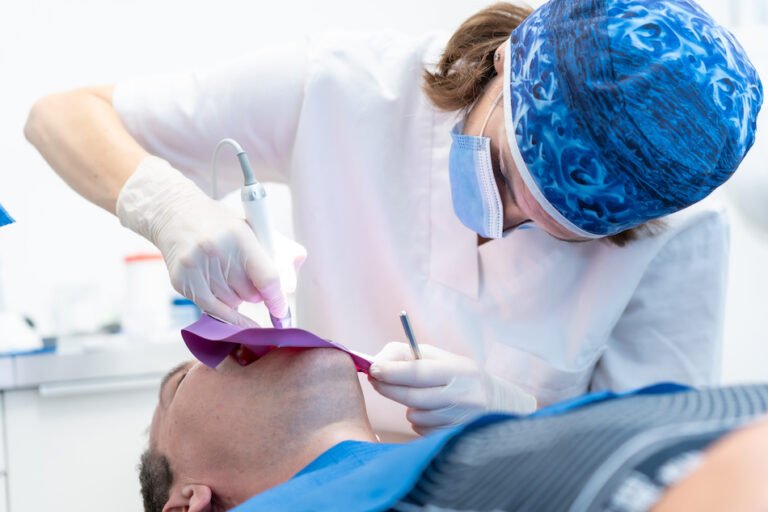
- Keeping the tooth clean. A rubber dam, a thin sheet placed around the tooth, keeps saliva and bacteria out during treatment (CDA).
When an x-ray shows a complex case, your dentist will explain before treatment starts whether a specialist is needed.
How complications are treated: retreatment, a specialist or extraction
- Retreatment. The tooth is reopened, the old filling is removed, and the canals are cleaned and resealed.
- Endodontic surgery. An apicoectomy treats infection at the root tip when a nonsurgical root canal is not enough (AAE).
- Specialist care. Our dentists are general dentists. Your dentist will explain whether a specialist, such as an endodontist, is needed for your tooth.
- Extraction. When a tooth cannot be saved, it is removed, and the gap can later be filled with an implant, bridge or denture.
Extraction comes with its own recovery. You will likely bleed for the first hour or two, and the area may ooze for up to a day. Pain is often greatest in the first 24 to 48 hours, and swelling can last 5 to 7 days (CDA). Learn more about tooth extraction.
Each option has its own cost. Our root canal cost guide explains suggested fees, insurance and CDCP, including the preauthorization CDCP needs for retreatment (canada.ca).
How to lower your risk of complications
- Do not chew or bite on the treated tooth until it has been restored (AAE).
- Book your crown or final filling when your dentist advises.
- Brush and floss as usual, gently around the treated tooth.
- Keep regular checkups, since a treated tooth can still get decay or gum disease (CDA).
Our root canal aftercare guide covers the first few days step by step.
When to call us
Contact us if you notice any of these after a root canal (AAE):
- Severe pain or pressure lasting more than a few days
- Visible swelling inside or outside your mouth
- A rash, hives or itching after taking medicine
- A bite that feels uneven
- A temporary filling or crown that comes out
- The symptoms you had before treatment coming back
We offer same-day emergency appointments when possible. Call 911 if swelling affects your breathing or swallowing. Go to the nearest hospital emergency department for facial swelling with fever. Outside clinic hours, call Health Link 811 for 24/7 advice from a registered nurse.
Root canal complications FAQ
The main ones are an infection that persists or returns, missed or curved canals, a broken instrument tip, a cracked tooth and a flare-up of pain or swelling. Most root canal treatments are successful, and these problems are uncommon.
Yes. New decay, a loose or cracked crown or filling, or a fracture can let bacteria back into a treated tooth. Retreatment or surgery may save it, depending on the cause.
Tenderness for the first week or two can be normal. Severe pain, visible swelling, or pain that keeps getting worse is not typical, so call your dentist.
Your dentist will check the tooth with an exam and x-rays. Options include retreatment, root canal surgery, or extraction and replacement of the tooth. Your dentist will explain the choices and whether a specialist is needed.
Both are routine procedures. Saving a natural tooth avoids having to replace it with an artificial one, and extraction is the right choice when a tooth cannot be saved. Your dentist will explain the options for your tooth.
If a treated tooth is bothering you, or you are weighing your options, our team can take a look. Learn about root canal treatment at The Port Dental Clinic, then book online or call 403-345-1110.