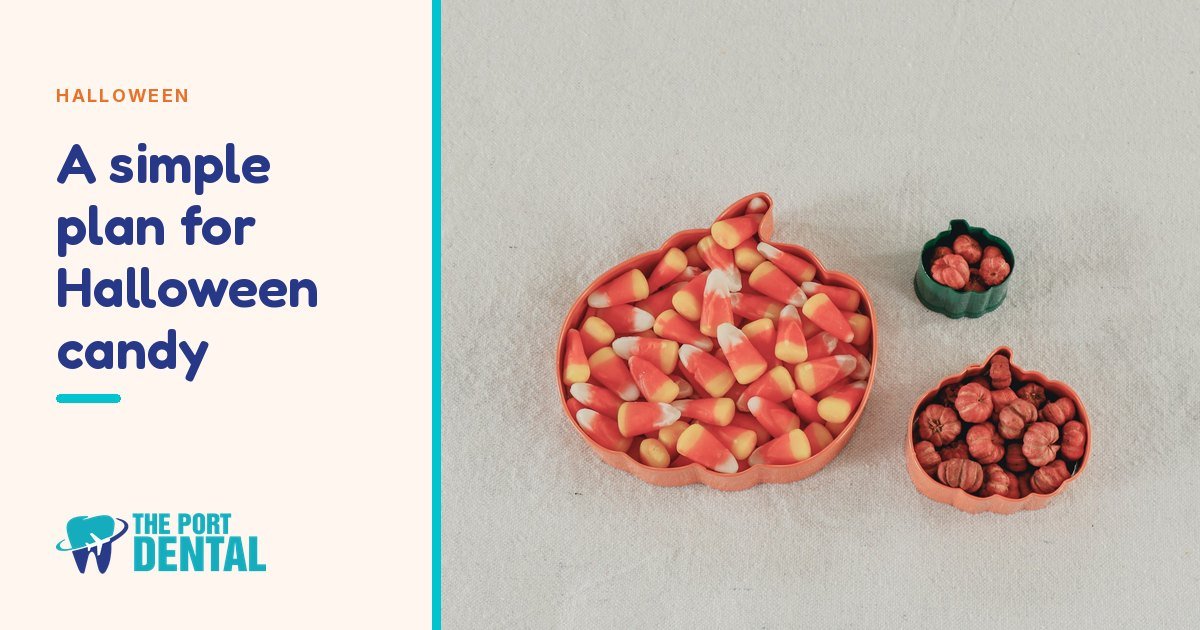
Halloween candy and healthy teeth can go together. Halloween falls on Saturday, October 31 this year. To protect kids’ teeth, limit sticky, hard and sour candy, and serve candy with or right after a meal instead of as an all-day snack. Follow each treat with a drink of water and brush before bed as usual. After sour candy, rinse with water and wait before brushing. Plain chocolate is easier on teeth than gummies because it dissolves quickly, the Canadian Dental Association (CDA) says.
At The Port Dental Clinic in NE Calgary, we help families keep treats fun and teeth healthy. Here is a simple plan, with no lectures. You can also learn about our dental care for kids.
Which Halloween candy is hardest on teeth?
The CDA sorts candy by how long it stays on the teeth and what it does there.
| Candy type | Why it matters | Easier approach |
|---|---|---|
| Sticky and chewy: gummies, caramels, chews, nougat, dried fruit | Stays on the teeth and feeds cavity-causing bacteria | Have a few with a meal, then drink water |
| Hard candy and lollipops | Soaks teeth in sugar for a long time and can chip teeth | Choose these less often and avoid crunching them |
| Sour candy | The acid can wear away enamel (the hard outer layer of the tooth) | Rinse with water after, then wait before brushing |
| Plain chocolate | Dissolves quickly, so teeth meet sugar for less time | A good choice for the treat after dinner |
| Powdered sugar candy | Dissolves fast and leaves less behind on the teeth | Follow with a drink of water |
Every family’s bag looks different, and there is no need to sort candy into good and bad. Knowing how each type behaves just helps you decide what to enjoy first and what to save. If your child has braces or gets cavities often, ask your dentist which treats suit them.
Why candy with meals is easier on teeth
Each time a child eats sugar, bacteria in plaque (the sticky film on teeth) turn it into acid that attacks the teeth, as Canada.ca explains. Grazing from the candy bag all afternoon means the teeth face acid again and again. During a meal, the mouth makes more saliva, which helps wash sugars away, according to the CDA.
That is why the CDA’s Halloween tips suggest limiting candy to mealtimes.
When should kids brush after eating candy?
For most candy, have your child drink water right away and brush at the usual times. The CDA recommends brushing twice a day and flossing every day.
Sour candy needs a different routine, because its acid can wear down enamel. Have your child rinse with water right after, then wait before brushing. The CDA’s general advice is to wait at least 20 to 30 minutes after eating before brushing. For acidic foods, the American Dental Association suggests waiting about an hour, so saliva can wash the acid away and the enamel can harden again (MouthHealthy). Offering sour candy earlier in the day leaves time to wait and still brush before bed.
Use the right amount of fluoride toothpaste for your child’s age. From age 3, that is a small pea-sized amount, as Canada.ca advises. Under age 3, the CDA advises a rice-grain amount only if your child is at risk of decay, so ask your dentist. Keep helping with brushing until your child can do a thorough job alone.
A simple plan for the Halloween candy bag
- Bring a smaller bag when trick-or-treating, as the CDA suggests.
- At home, sort the candy together and let your child pick favourites to keep.
- Set treat times for the days after Halloween, such as after lunch and after dinner.
- Keep the bag in the kitchen, away from bedrooms and backpacks.
- Pour a glass of water to go with each treat.
- Offer a trade. The CDA suggests swapping some candy for a toy or a fun outing.
- For kids old enough to chew gum safely, sugar-free gum after candy helps make saliva that washes sugar off the teeth, the CDA notes.
- Brush before bed every night, Halloween included.
Candy is part of the fun, so keep the tone positive. A plan your kids help make feels fair to everyone.
Halloween with braces or aligners
Hard and sticky candy can damage brackets and wires. Plain chocolate and soft treats that melt are easier on braces. Our post on the dos and don’ts of wearing braces has more food tips.
Teens with clear aligners should take them out before eating candy. Invisalign Canada advises brushing after eating and before putting aligners back in.
When to call us
Call us if your child has:
- A tooth that chips or cracks on hard candy
- A filling, crown or bracket that comes loose
- A toothache or sensitivity that doesn’t settle
- White, brown or dark spots on the teeth
We offer same-day emergency appointments when possible. Outside our hours, call Health Link 811 for 24/7 health advice. Call 911 for trouble breathing or swallowing. Go to the nearest emergency department for facial swelling, fever or a facial injury. For year-round habits, see our tips to prevent cavities. If you have a toddler, our guide to your child’s first dental visit explains when to start checkups.
Halloween candy and teeth FAQ
Plain chocolate dissolves quickly, so teeth are exposed to sugar for less time. Gummies and other chewy candy stay on the teeth and feed cavity-causing bacteria, according to the Canadian Dental Association.
Have your child rinse with water right away, then wait before brushing. The Canadian Dental Association advises waiting at least 20 to 30 minutes after eating, and the American Dental Association suggests about an hour after acidic foods such as sour candy.
Yes. Spread it out over set treat times with meals, offer water after each treat, and keep brushing twice a day. You can also offer to trade part of the bag for a toy or an outing.
For children old enough to chew gum safely, yes. The Canadian Dental Association says chewing sugar-free gum after candy produces saliva that washes away the sugar left on the teeth.
Book your child’s next checkup and we’ll look for any early spots. Learn about dental care for kids at The Port Dental Clinic, then book online or call 403-345-1110. We’re in The Port Plaza at 4250 109 Ave NE #3145, open weekdays 9am to 7pm and weekends 9am to 4pm.