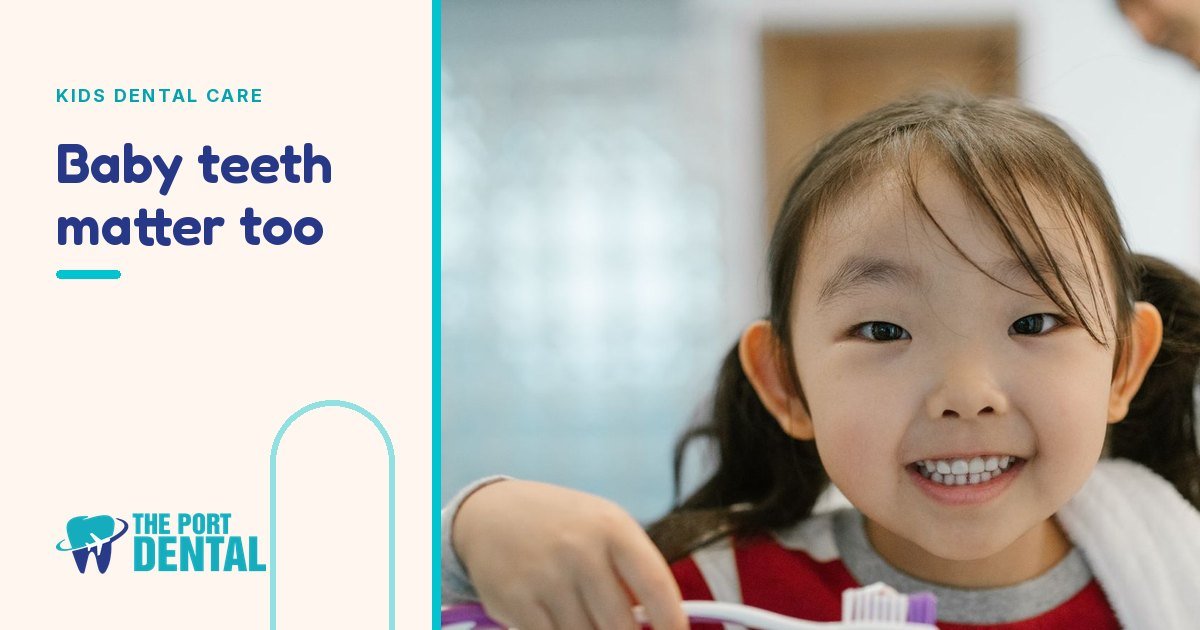
Cavities in baby teeth can start soon after the first tooth appears, and the Canadian Dental Association (CDA) calls cavities the main problem children have with their teeth. Baby teeth matter because children use them to chew, to speak clearly and to hold space for adult teeth, as Canada.ca explains. A few daily habits can help protect them. Brush twice a day with the right amount of fluoride toothpaste. Offer water between meals. Put your child to bed with nothing but water in the bottle. Plan the first dental visit by age one.
At The Port Dental Clinic in NE Calgary, we care for children from their first tooth through their teen years. Learn more about our pediatric dentistry services.
Why do baby teeth matter if they fall out anyway?
Baby teeth (also called primary teeth) do important jobs for years. According to Canada.ca, they help your child:
- Chew and break down food
- Learn to speak clearly
- Hold space in the jaw for the adult teeth growing underneath
- Feel good about their smile
Children start losing baby teeth around age six, and some stay until about age 12, says the CDA. A cavity left untreated can lead to pain and infection. If a baby tooth has to come out early, the dentist may suggest a space maintainer (a small appliance that holds the gap open) so the adult tooth has room, as the CDA explains.
What causes cavities in baby teeth?
A cavity forms when bacteria in plaque (the sticky film on teeth) feed on sugars and make acid that attacks the tooth surface, as Canada.ca describes. Each time sugar reaches the teeth, a new acid attack begins. Common causes in young children include:
- Going to bed with a bottle of milk, formula or juice. The CDA notes that all of these contain natural sugars.
- Sipping juice, pop or other sweet drinks through the day
- Sugary snacks that stay in the mouth a long time, such as lollipops, gummies, toffee and dried fruit, which the CDA suggests limiting
- Frequent sweet snacks between meals
- Skipping the bedtime brush
What are the early signs of a cavity in a baby tooth?
Early decay can be hard to spot. The CDA suggests checking your child’s teeth once a month. Lift the lip so you can see the teeth near the gums. Look for:
- Dull white spots or lines, often near the gum line
- Brown or dark areas on the teeth
- Your child saying a tooth hurts when eating
The CDA advises going to the dentist right away if you see any of these signs.
How much toothpaste should a child use?
Fluoride is a mineral that strengthens tooth enamel (the hard outer layer of the tooth). Young children need only a small amount of fluoride toothpaste. This table follows guidance from the CDA and Canada.ca tips for children aged 0 to 3, aged 3 to 6 and aged 7 to 12.
| Age | Toothpaste amount | Who brushes |
|---|---|---|
| Under 3 | A smear the size of a grain of rice if your child is at risk of decay. If not, a toothbrush moistened with water. | An adult brushes |
| 3 to 6 | A dab the size of a small green pea | An adult helps |
| 7 to 12 | A pea-sized amount | Your child brushes, with reminders and checks from you. Help with flossing until they can floss alone, usually around age 9. |
The CDA advises asking a health professional whether a child under 3 is at risk of decay, so ask us at your child’s visit. Brush for two minutes, twice a day. Canada.ca calls the brush before bedtime the most important one.
Daily habits that help prevent cavities
- At bedtime, offer only water in the bottle. The CDA suggests watering down your child’s usual drink a little at a time over one to two weeks.
- Move to an open cup by age one, as Canada.ca recommends.
- Offer water between meals. Canada.ca advises avoiding sugary drinks, including fruit juice.
- Serve sweets with meals instead of as snacks. The CDA explains that saliva during a meal helps rinse sugars away.
- Limit sticky snacks that cling to teeth.
- Lift the lip once a month to check for spots.
For more ideas for the whole family, see our tips to prevent cavities.
Do sealants and fluoride varnish help prevent cavities?
Both are simple treatments done at the dental office. Fluoride varnish is a tinted coating painted on the teeth that releases fluoride to strengthen enamel. A sealant is a thin plastic coating on the chewing surfaces of back teeth that keeps food and bacteria out of the grooves. Canada.ca describes both.
The CDA notes that your dentist may suggest sealants once the permanent molars come in. Read more about the benefits of dental sealants. If your family has Canadian Dental Care Plan (CDCP) coverage, its Dental Benefits Guide lists sealants for clients 17 and under. It also covers topical fluoride treatments, with limits on how often (once in any 6 months for children 16 and under).
When should your child first see a dentist?
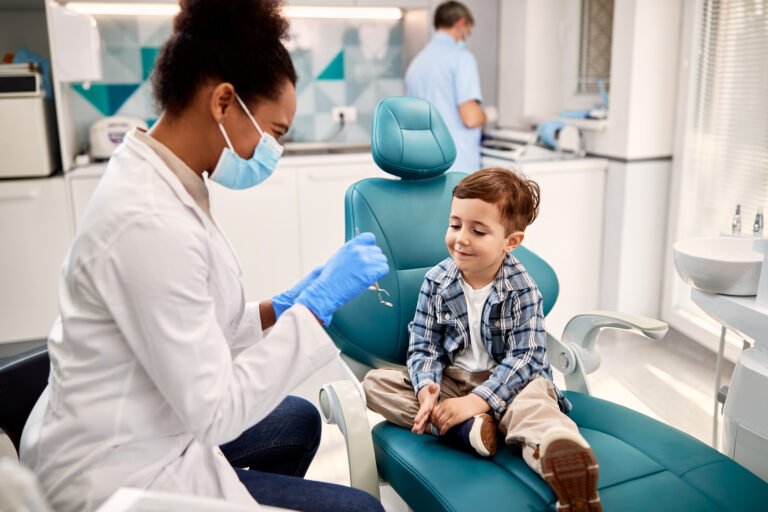
The CDA recommends a first visit within six months of the first tooth or by age one. An early visit lets the dentist check for signs of decay and show you how to care for your child’s teeth at home. Our guide to your child’s first dental visit explains what happens and how to prepare.
When to see a dentist
Book a visit if your child has:
- White, brown or dark spots on the teeth
- A tooth that hurts, or they avoid chewing on one side
- Sensitivity to cold or sweet foods
- Swelling of the gum near a tooth
- A tooth that was chipped or knocked loose in a fall
We offer same-day emergency appointments when possible. Outside our hours, call Health Link 811 for 24/7 health advice. Call 911 for trouble breathing or swallowing. Go to the nearest emergency department for facial swelling, fever or a facial injury.
Baby teeth cavity FAQ
Often, yes. Untreated decay can cause pain and infection, and some baby teeth stay until about age 12. Your dentist will explain the options for your child’s tooth.
The Canadian Dental Association advises against it. Milk, formula and juice all contain sugars, and going to bed with a bottle of any of them can lead to early childhood tooth decay. Offer plain water instead.
For children under 3, the Canadian Dental Association advises a rice-grain amount if your child is at risk of decay, and a brush moistened with water if not. From age 3 to 6, use a small pea-sized amount. Ask us which fits your child.
Juice contains sugars, and sipping it through the day keeps sugar on the teeth again and again. Canada.ca advises avoiding sugary drinks, including fruit juice, and offering water between meals.
Keep your child’s smile on track with regular checkups. Learn about pediatric dentistry at The Port Dental Clinic, then book online or call 403-345-1110. We’re accepting new patients at 4250 109 Ave NE #3145 in NE Calgary, open weekdays 9am to 7pm and weekends 9am to 4pm.